
The Anatomy of a High-Performing Dynamic Ad
Dynamic ads are no longer a differentiator — they’re the baseline. But knowing that DCO works and knowing how to make it work well are very different things.


Key Takeaway
Most underperforming dynamic campaigns aren’t failing because of media strategy. They’re failing because of what’s inside the ad itself.
A Template Built for Flexibility, Not Just Aesthetics
The template is the engine. A well-structured dynamic ad template defines fixed brand zones — logo placement, colour system, typography — and clearly separates them from the dynamic zones where content will change. When those boundaries are fuzzy, the creative breaks under the weight of too many variants.
The best templates are designed with the feed in mind from the start, not retrofitted after the fact. Every dynamic element should have a fallback: if the data field is empty, the layout should still hold.
Clean, Structured Data
A dynamic ad is only as good as the data feeding it. Inconsistent product names, missing image dimensions, unformatted prices, or truncated descriptions will surface as broken creatives at scale. Before optimising the creative layer, the data layer needs to be reliable.
High-performing teams treat their product or content feed as a live asset — not a one-time export. Regular validation, field normalisation, and character-count rules are standard practice, not afterthoughts.
Meaningful Personalisation Signals
Personalisation that doesn’t change behaviour isn’t personalisation — it’s complexity for its own sake. The strongest dynamic ads use signals that actually influence purchase decisions: audience segment, geography, device type, time of day, or where someone is in the funnel.
Swapping a product image because someone browsed that category is meaningful. Changing a background colour because of a user’s region probably isn’t. Every dimension of personalisation multiplies production and QA overhead — so it needs to earn its place.
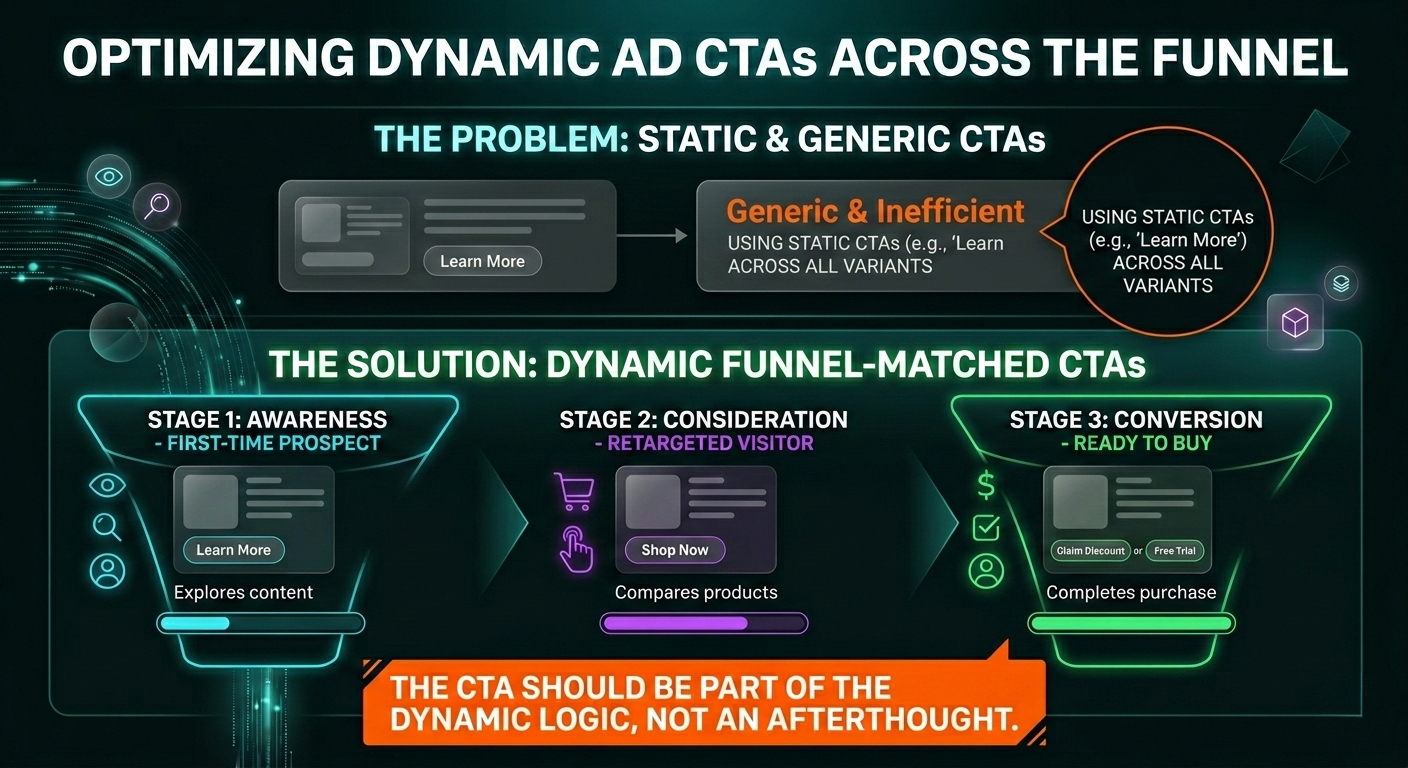
A CTA That Matches the Funnel Stage
One of the most consistent mistakes in dynamic ad builds is using a static, generic call-to-action across all variants. A prospect seeing an ad for the first time responds differently to ‘Learn More’ than a retargeted user who has already visited the product page. The CTA should be part of the dynamic logic, not an afterthought.
A QA Process That Scales with the Creative
At low volume, manual QA is manageable. At scale, it’s where errors hide. A high-performing dynamic ad setup includes automated checks for text overflow, image resolution, missing fields, and render consistency across sizes and placements — not just spot-checks on a handful of variants.
The output quality of a DCO campaign is ultimately a reflection of the systems behind it. Getting these five components right doesn’t guarantee performance, but getting any of them wrong will reliably limit it.
Understanding the anatomy is the first step. The second is building the infrastructure that makes each component consistently reliable — across every variant, every placement, every campaign.
