
From Brief to Banner in Minutes: Killing the Creative Production Bottleneck
Most underperforming campaigns aren't failing because of media strategy. They're failing because the creative production chain can't keep up with what modern platforms actually demand. Understanding why that gap exists is the first step to closing it.
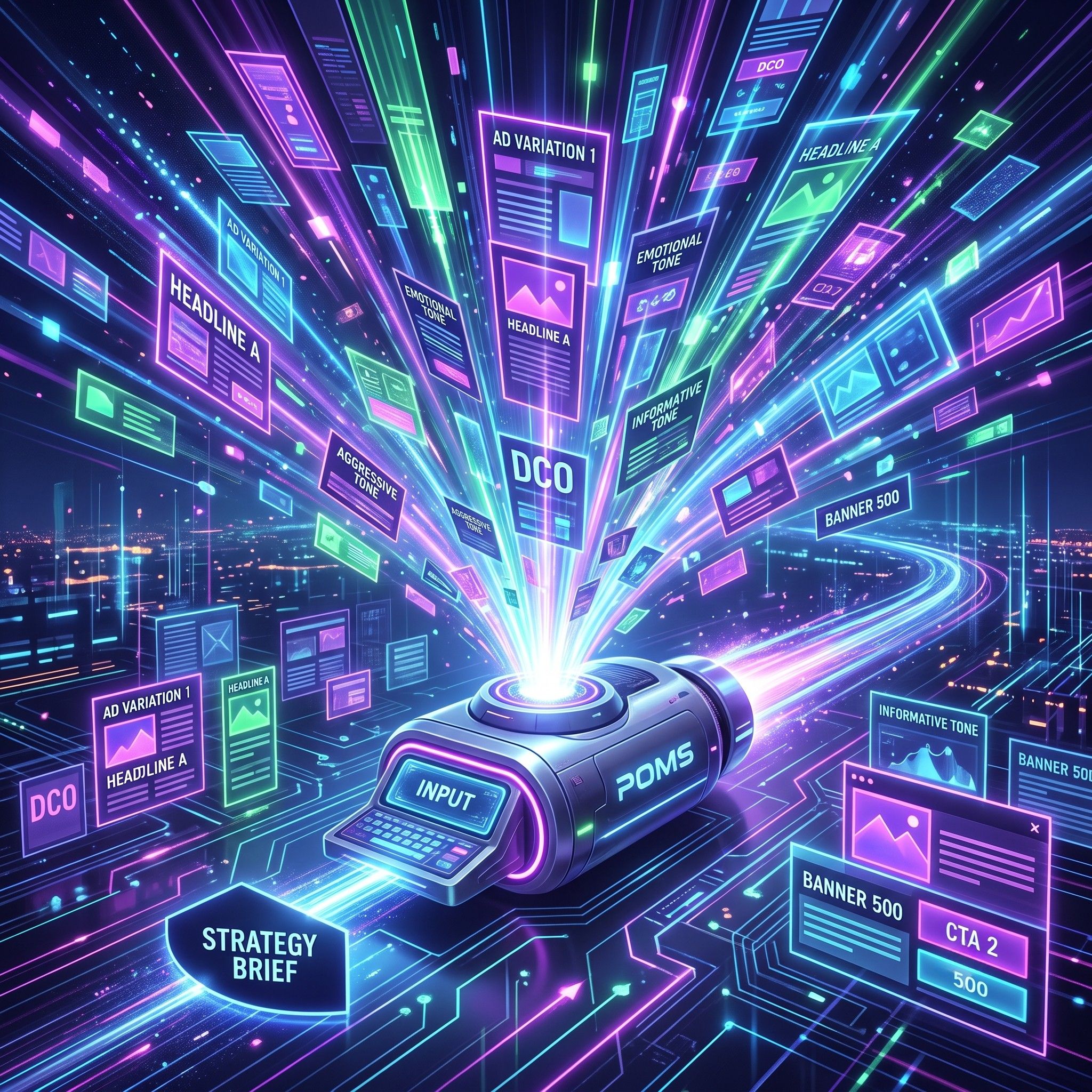
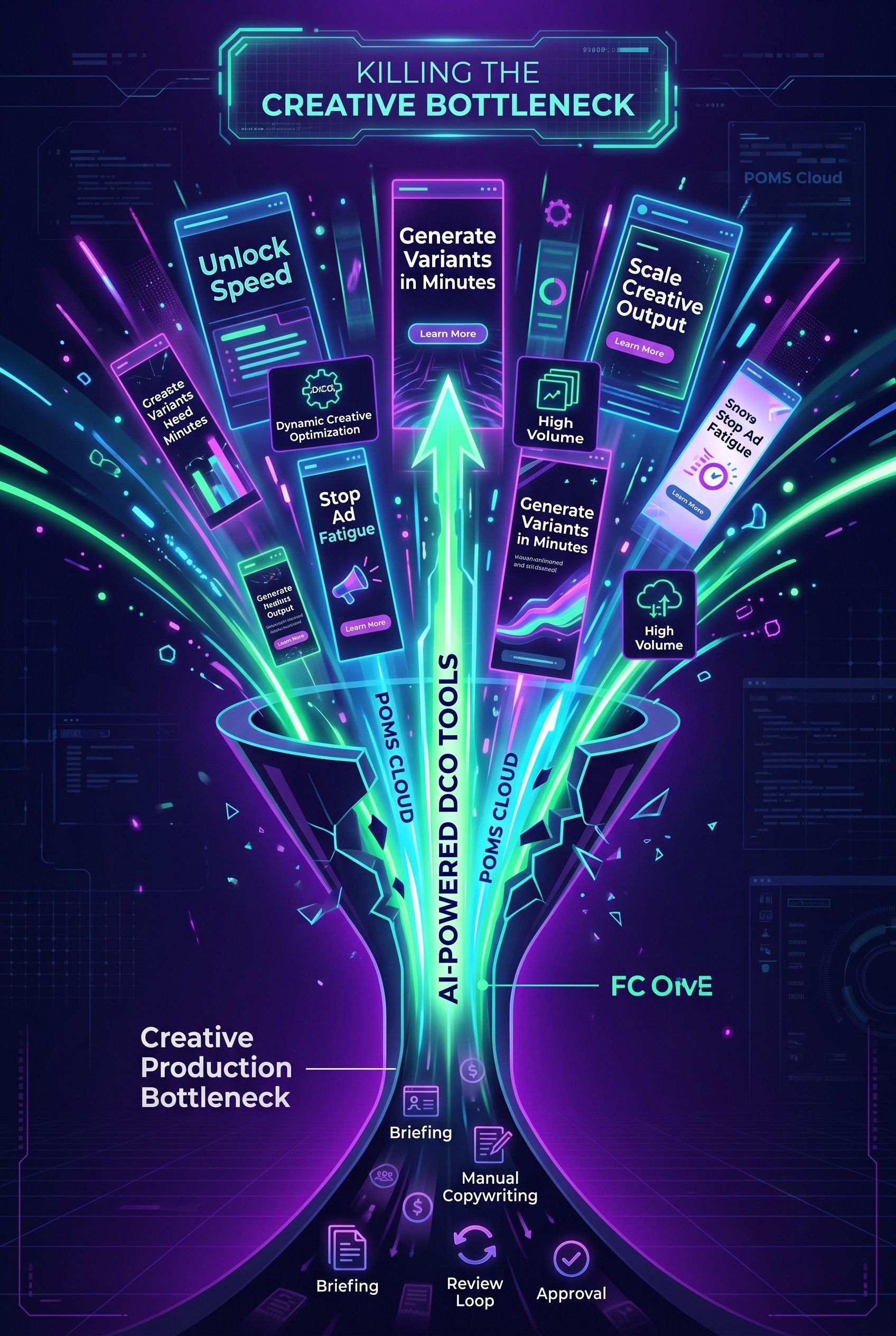
The Algorithm Doesn't Wait for Your Copy to Be Ready
Platforms reward the brand that gives the algorithm the most to work with. The more variation you feed in different headlines, different angles, different tones the better it learns what converts. The problem is that a senior copywriter at full capacity produces five to ten solid variants a day. The platform burns through all of them before the week is out.
"Creative fatigue isn't a campaign problem. It's a production infrastructure problem and it compounds every time you scale."
Why Creative Fatigue Is Getting Worse, Not Better
Creative fatigue - the decline in performance when audiences see the same asset too many times used to arrive in weeks. Now it arrives in days. Platforms are better than ever at finding your audience quickly, which means they exhaust your creative faster than ever too.
The industry response is Dynamic Creative Optimization (DCO): serve different combinations of creative elements to different users in real time, letting the algorithm find the highest-performing combination per segment. It works but only when there's enough variation to test meaningfully. A handful of variants isn't enough. You need a system that produces at the speed the platforms consume.
The Three Levers Most Teams Aren't Using
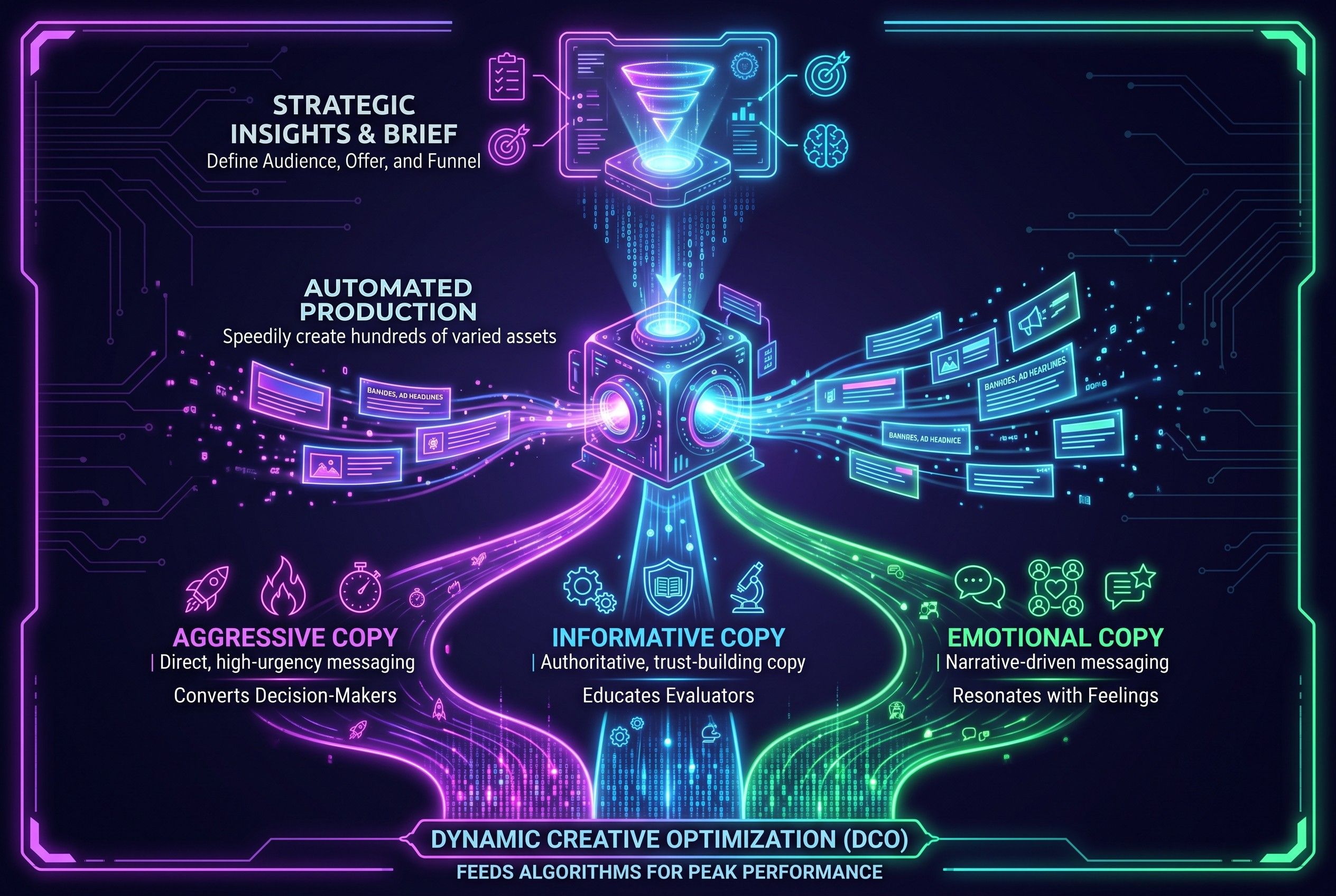
Beyond volume, there's a structural issue in how most teams approach copy. Most campaigns launch with one tone - usually whatever felt right in the brief. But different audiences, at different funnel stages, respond to fundamentally different messaging:
- Aggressive: Direct, high-urgency messaging that converts audiences already close to a decision.
- Informative: Authoritative, trust-building copy for audiences still evaluating their options.
- Emotional: Narrative-driven messaging for audiences who need to feel something before they act.
Running all three simultaneously and letting performance data decide which wins for which audience is standard practice for top-performing teams. The barrier isn't strategy. It's the time it takes to write, review, and approve three complete copy sets for every campaign.
What a Faster Production System Actually Looks Like
The answer isn't to cut corners on copy quality. It's to separate the strategic thinking from the mechanical execution. When the structural logic of a campaign is sound - the audience, the offer, the funnel stage - the actual generation of headline variations, primary text options, and description alternates is largely repeatable work.
Al-assisted creative tools like the POMS Cloud Master Creative Generator Factory are built for exactly this layer. The brief the strategic input - still comes from your team. What changes is how fast that brief becomes a testable creative bank, and how consistently the output meets platform requirements without a manual compliance check on every line.
The bottleneck was never the idea. It was always the gap between having a strategy and having enough creative to test it properly at the speed the algorithm demands.
