
DCO 101: Why Personalisation is the New Standard for 2026
In the rapidly shifting digital landscape of 2026, personalisation is no longer a luxury—it is the baseline for survival. The era of static, "one-size-fits-all" banners is over.
Quick Insight
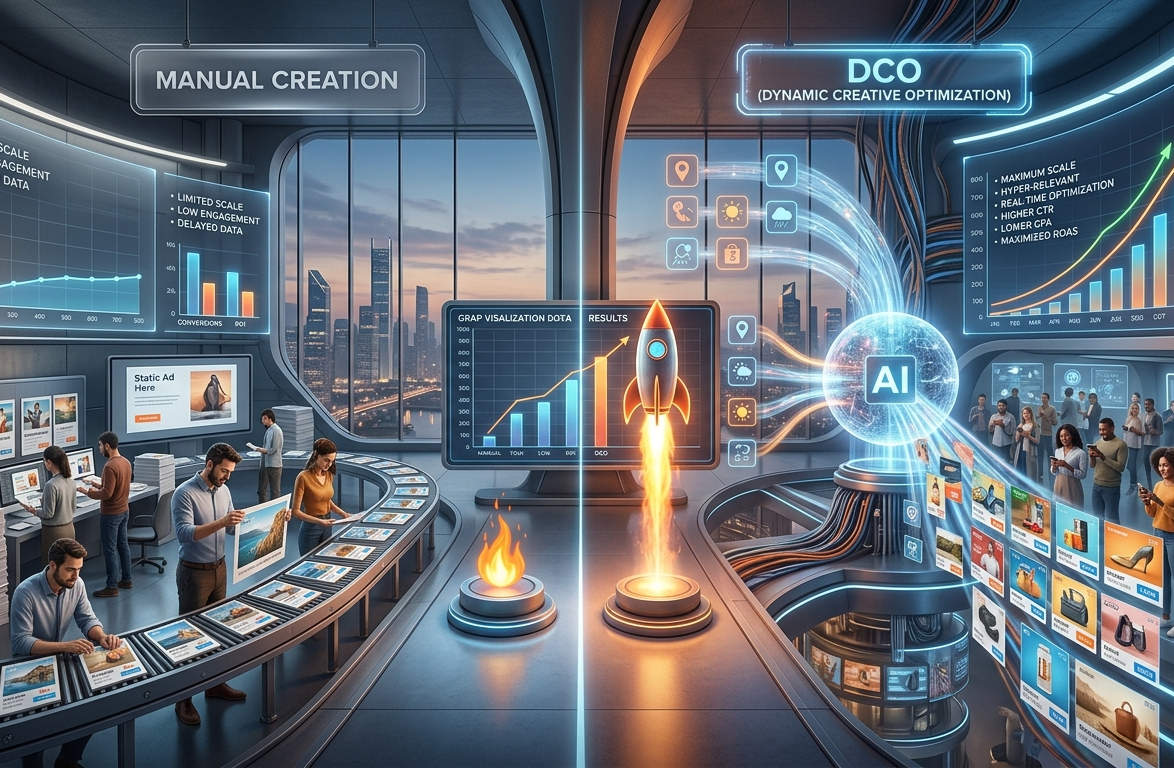
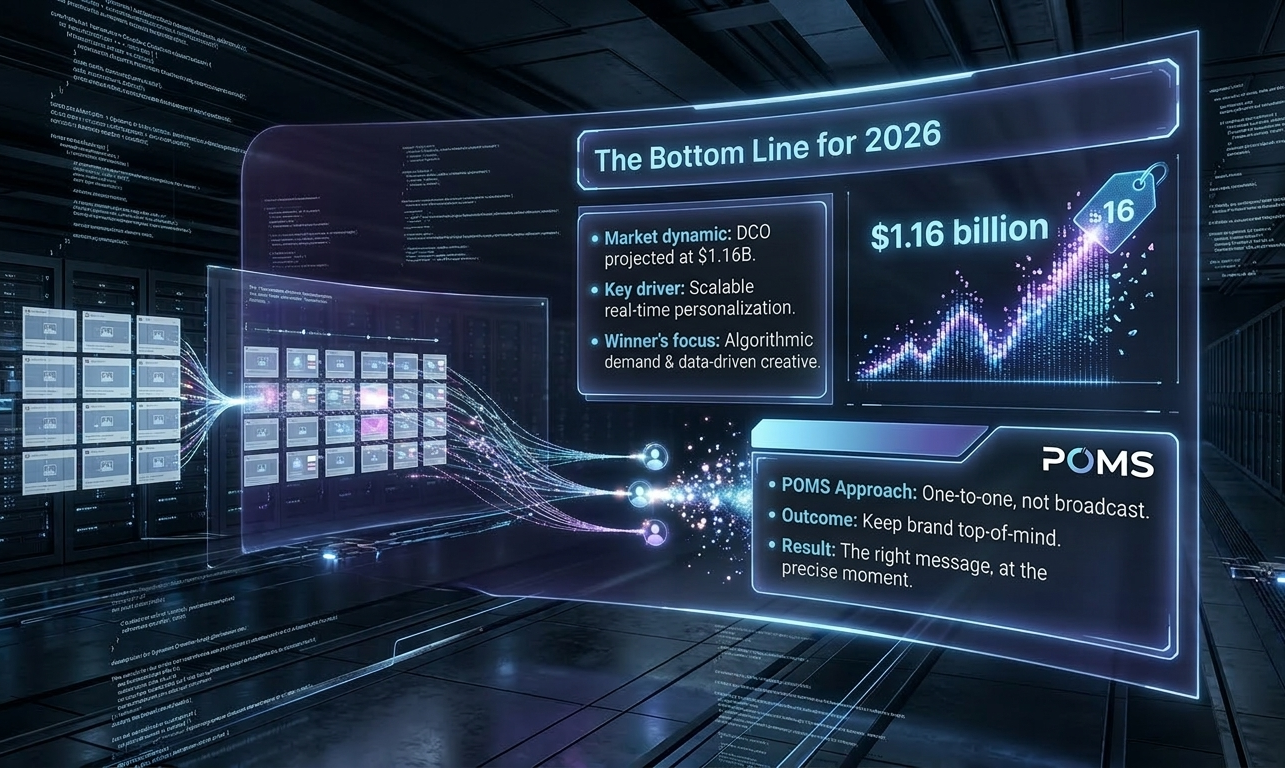
DCO market is projected to hit $1.16 billion this year, driven by algorithmic demand for quality.
Today’s audiences don’t just want ads; they expect real-time experiences tailored to their location, timing, and unique context. To bridge this gap, forward-thinking brands are moving from reactive marketing to predictive experience design, with Dynamic Creative Optimization (DCO) as the engine driving this evolution.
What is Dynamic Creative Optimization (DCO)?
Before we dive into the strategy, let’s define the tech. DCO is an advanced form of programmatic advertising that uses automated technology to assemble and customise ad creatives in real-time.
Unlike traditional static ads, DCO constructs an ad "on the fly" for every individual impression. By leveraging real-time data, the system selects the most effective combination of images, headlines, and calls-to-action (CTAs) to ensure the message is highly relevant.
The Three Pillars of DCO Execution
To master DCO, you must understand the three core components that enable real-time personalisation:
- The Data Feed (The Fuel): A structured file containing your dynamic info—product names, fluctuating prices, or inventory levels. It also pulls in external signals like weather and geolocation.
- The Creative Template (The Shell): A flexible master design with placeholders for dynamic elements, allowing for limitless variations from a single concept.
- The Decision Logic (The Brain): The rules that connect data to the template. For instance: "If it’s raining in Dublin and the user is a returning visitor, show the raincoat creative with a 10% discount."
"Success in 2026 will not belong to the brands with the largest teams, but to those who can meet algorithmic demand with high-quality, data-driven creative."
Why Relevance is Your Competitive Edge
Adopting DCO provides a staggering advantage. Research indicates that this level of hyper-personalisation can lead to a 10-15% uplift in revenue.
Take the Irish market: Bord na Móna ran a brilliant weather-triggered campaign that only activated when local temperatures dropped below 7°C. They weren’t just "running ads"; they were providing a solution exactly when the consumer felt the chill.
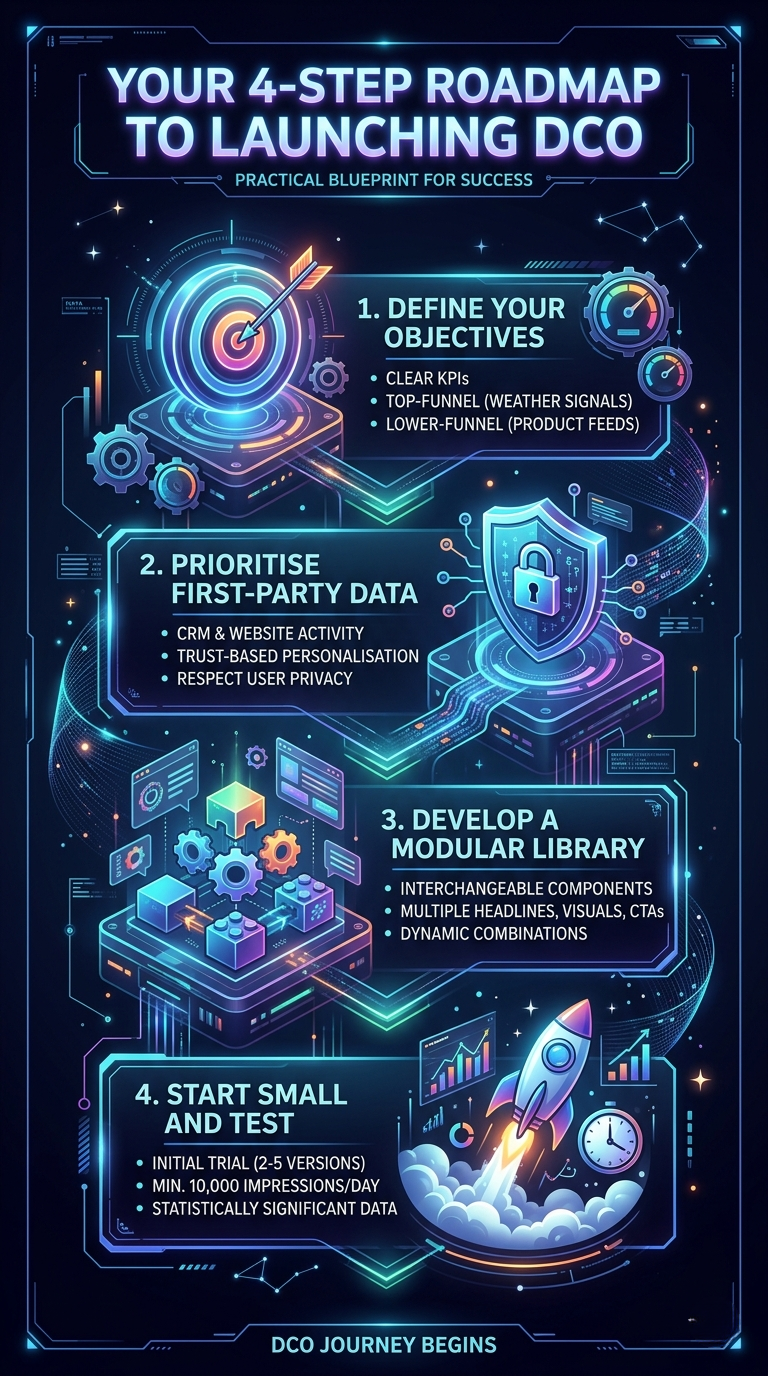
Your 4-Step Roadmap to Launching DCO
- Define Your Objectives: Start with clear KPIs. Are you aiming for top-funnel awareness or lower-funnel conversions?
- Prioritise First-Party Data: In a post-cookie world, your CRM and website activity data are gold for trust-based personalisation.
- Develop a Modular Library: Shift from finished ads to a library of interchangeable components (headlines, visuals, CTAs).
- Start Small and Test: Test 2–5 creative versions with a minimum of 10,000 impressions per day to gather significant data.
The Bottom Line for 2026
At POMS, we understand that the goal of dynamic creative is to facilitate one-to-one conversations rather than a one-to-many broadcast. By embracing DCO, you ensure your brand remains top-of-mind, delivering the right message at the precise moment it matters most.
Ready to transform your creative strategy? Book a DCO Audit with POMS and let’s build an ad experience that actually converts.
