
Turning DIY Ads into Profit Machines
Dynamic Creative Optimization (DCO) enables DIY and home improvement retailers to automatically generate thousands of personalised ads from product feeds, eliminating manual creative bottlenecks while improving performance. Real-world implementation data from Hungary's €400M home furnishing market shows DCO achieves 76% higher ROAS.


This study uncovers a market shift that most retailers are structurally unable to capture. The research reveals that government-subsidised lending creates entirely new consumer psychographics demanding industrial-scale personalisation. The secret weapon? Dynamic Creative Optimization.
The study is unequivocal: manually creating ads for 50,000+ SKU catalogues across three distinct buyer segments is operationally impossible. The solution, as the research proves, is an automated, feed-driven creative that adapts in real-time to buyer psychology.
The Psychology of the Post-Purchase Window
Hungary's 3% mortgage program created a €400M annual DIY opportunity concentrated in a 180-day window. But these aren't generic homebuyers—they're three psychographically distinct segments:
- Nest Builders (families, 25-35): Prioritise child safety and comfort.
- Green Modernisers (35-55): Make ROI-driven energy decisions.
- Urban Nomad Investors: Optimise for aesthetic rental yields.
A buyer motivated by energy savings requires completely different creativity than one seeking Instagram-ready interiors. This is where Dynamic Creative Optimization transforms the equation. Platforms like POMS enable a single product feed to automatically generate thousands of segment-specific ads—energy ROI calculators for Green Modernisers, child-safety bundles for Nest Builders—delivered at the critical 72-hour post-purchase peak.
The results are staggering:
- 76% improvement in ROAS.
- 47% higher CTR.
- 36% reduction in CPA.
- 99% reduction in production time.
Case Study: The 72-Hour Golden Hour
The research identifies a critical window following property purchase when DIY search activity peaks. Retailers using DCO deploy segment-specific creative at an industrial scale, while competitors remain locked in manual production.
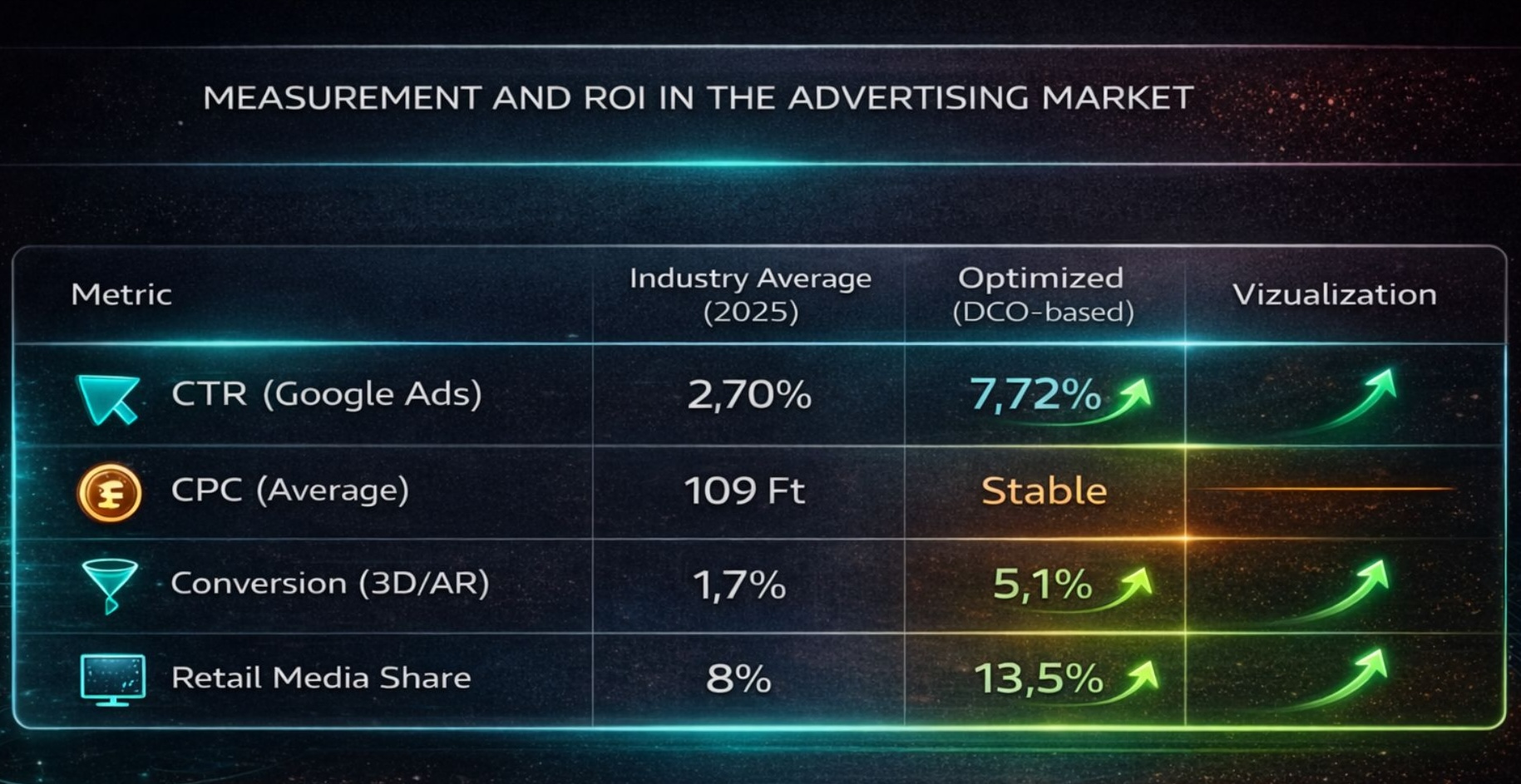
With Google Shopping CPC rising 16.7% and retail media expanding from 8% to 13.5% share, automated personalisation shifted from advantage to survival. Hungarian retailers managing 50,000+ products cannot generate thousands of monthly variations at traditional speeds.
When government policy creates demand surges and compressed decision windows, traditional infrastructure cannot scale. On average, retailers implementing DCO achieved:
- 76% higher ROAS
- 47% higher CTR
- Production cost reductions approaching 99%
The Hungarian case demonstrates an uncomfortable truth: industrial-scale relevance isn't optional. Dynamic Creative Optimization is the minimum viable response to structurally altered markets.
